
Tools and providers
Part of Email automation for UK small business: what to look for
Email automation for UK small business: what to look for
What to check in email automation software for a UK small business: trigger depth, pounds-based pricing lines, UK support hours and integration with your accounts.
What to take away
- Judge an automation tool by the workflows you can run next quarter, not by the size of its template library.
- Price it in pounds across contacts, send volume and seats, then add onboarding and migration time.
- Ask which hours support covers in UK time, and whether you get a named contact or a ticket queue.
- Test the connector to your accounting or storefront software with real records before signing an annual term.
- Fix SPF, DKIM and DMARC first, because no workflow performs well from a domain receivers distrust.
Define the jobs before you shop
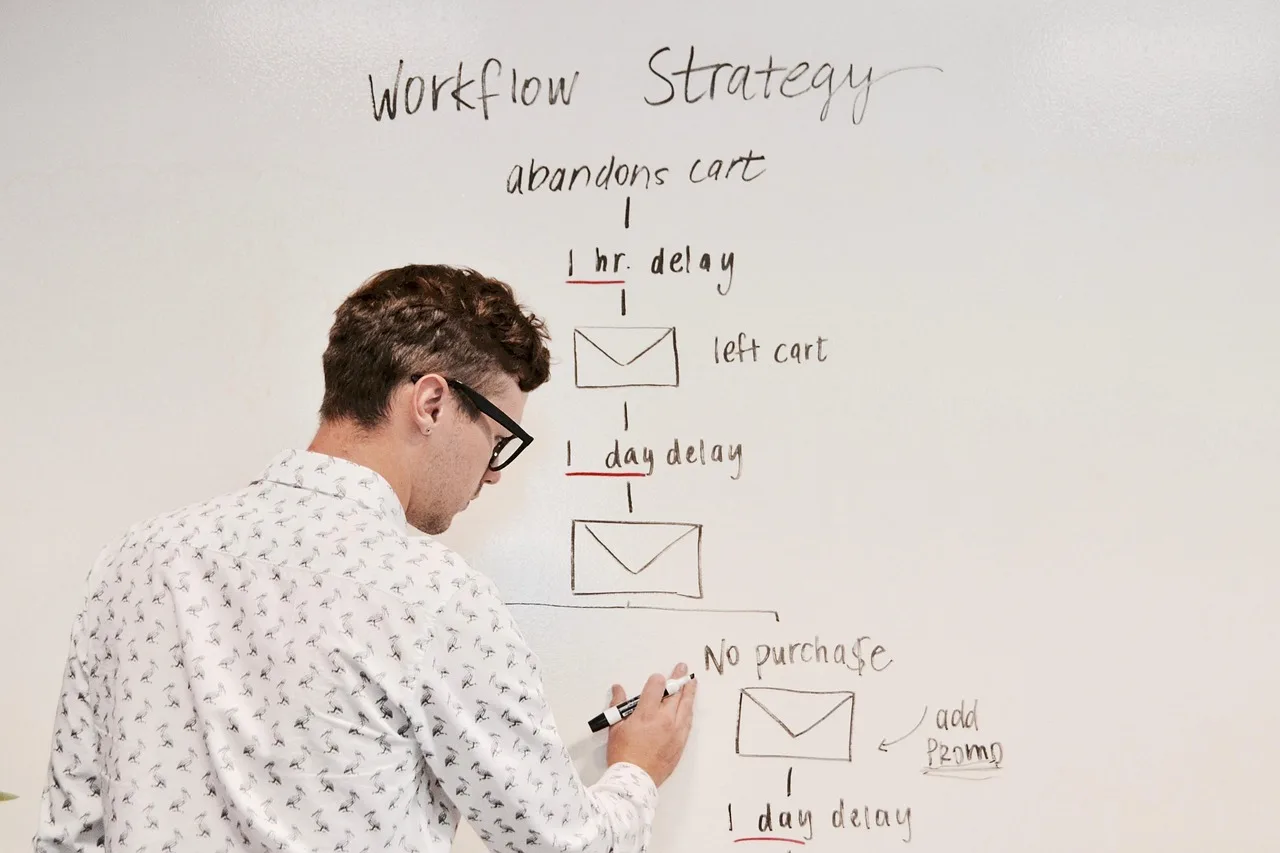
Most small UK firms do not need a marketing automation platform. They need four or five sequences that run without anyone remembering to send them. Write those down before you open a browser.
Four sequences to write down
- Welcome sequence
- Quote or basket follow-up
- Renewal reminder
- Review request
Typical jobs are a welcome sequence, a quote or basket follow-up, a renewal reminder and a review request. A tool that runs those four cleanly is worth more than a cheaper one that needs a developer for each change.
None of it works from a domain that receivers distrust. DMARC builds on SPF and DKIM, and a sending domain with no published policy is easier to filter.
Four capabilities worth testing
Trigger depth matters more than template count. Test whether a sequence branches on a purchase, a tag or a date. Check that you can pause one contact without pausing the whole list.
Four capabilities worth testing
- Trigger depthbranch on purchase, tag or date
- Send-time controlshourly sends awkward for reminders
- Frequency cappingrule for three sequences in a week
- Reportingwhich step produced the click, exportable
Send-time controls are the second test. Some tools send only at the top of the hour, which suits a newsletter and is awkward for a time-sensitive reminder.
Frequency capping is the third. If a contact qualifies for three sequences in one week, the tool should have a rule for that rather than leaving it to luck.
Reporting is the fourth. You want to see which step of which sequence produced the click, and to export that view.
What UK pricing actually contains
Headline prices rarely survive contact with a real account. Compare these five lines in pounds, and ask for each figure in writing.
| Line | What to check | Why it moves the bill |
|---|---|---|
| Contacts | Whether unsubscribed or inactive profiles still count | Stored contacts are charged even when they never receive |
| Sends | Monthly allowance and overage rate per 1,000 emails | A large one-off campaign can push you into overage |
| Seats | Who can build, send and edit | Editor seats usually cost more than read-only seats |
| Onboarding | Set-up, migration and template build | Often quoted separately from the subscription |
| Term | Monthly rolling against annual | Annual terms discount the price and lock up the cash |
Onboarding is where small budgets leak. Ask what is included in set-up and what is billed as a change request once the initial build is signed off.
Our guide to normalising software pricing before comparing headline prices explains how to put two quotes into the same units.
Support hours, data terms and funding
A tool sold globally is not always supported when you send. Ask which hours the desk covers in UK time, and whether anyone answers on a Saturday.
Consent rules do not change because a send is automated. A triggered sequence is still direct marketing, and the ICO guidance on direct marketing and electronic communications sets out the consent tests and the narrow soft opt-in for existing customers.
Ask where the data sits and whether the supplier will sign a processing agreement you can attach to your own privacy notice.
Cash is the other constraint. If a 12-month term is hard to fund, the finance and support finder on GOV.UK lists grants and loan schemes by region and business type.
Wiring automation into the systems you already run
- List every system that holds customer records, including the accounting package and any storefront.
- Check that a supported connector exists for each, and that it syncs both ways where you need it.
- Run a test sync with a small real segment and confirm the fields land where you expect.
- Agree who owns the data flow and who can pause it.
- Diarise a review a month after launch to check the sequences against the original job list.
If you sell online, email marketing software for UK ecommerce has to pull order and basket data, and the connector list matters more than the template gallery.
Common questions
Do small UK businesses need automation software at all?
Only where repeated sends are currently done by hand. A firm sending one newsletter a month can often manage with a basic plan and a scheduler.
How is automation priced?
By contacts and sends, not by workflow. Ask for a quote that lists your current contact count, monthly send volume and seats, plus the overage rate.
Does automation change the consent rules?
No. A triggered email is direct marketing, so the same PECR and UK GDPR tests apply to the person who receives it.
Which integration matters most?
The one holding the data your sequences depend on. For retailers that is order history, for B2B firms it is often a CRM or accounting record.